
A lead left unanswered for an hour is not just an unread message. It's a customer who may have already contacted another agent, reached out to a competitor, or simply lost interest. A guide to managing digital leads starts here: advertising brings exposure, but the speed of response and the organization that follows are what turn exposure into a deal.
For agents, entrepreneurs, and business owners advertising in Facebook groups and on Marketplace, the challenge is not just generating inquiries. It's managing them while simultaneously handling responses, messages, callbacks, new properties, and ads that need to be posted. Without a clear process, good leads get lost among notifications, customers receive inconsistent answers, and the sales team works hard without seeing the full picture.
Good lead management doesn't require another cumbersome system or hours of data entry. It requires a simple path: knowing where each inquiry came from, responding quickly, categorizing the need, determining the next action, and following up until there's a result.
A guide to managing digital leads: start before the lead comes in
The common mistake is thinking lead management starts when a message arrives. In reality, it begins with the ad itself. A clear ad attracts more precise inquiries and reduces calls like "How many rooms?" or "Which neighborhood?" when all the details should already be visible.
In a real estate ad, every publication should include details that allow the customer to decide whether to inquire: area, type of property, number of rooms, price or price range, main advantage, and a clear course of action. In product and service businesses, the principle is the same: what is offered, who it's suitable for, what the conditions are, and what the next step is.
The source of the lead must also be documented. If you've advertised the same property in dozens of groups, you need to know which group brought quality inquiries and which only brought general responses. Without this data, it's hard to improve the next ad and know where it's truly worth investing time.
This is where advertising automation becomes an operational tool, not just a distribution tool. When ads are consistently posted in relevant groups, with content tailored to the audience and documentation of the publications, you get a more organized basis for managing the inquiries that come afterward. Instead of guessing what was posted and where, you can focus on what the customer wrote.
Set a response time that doesn't depend on mood
Speed is a sales advantage, especially with leads from Facebook. Someone who wrote to you now is looking for an answer now. It's not always possible to provide a full response at that moment, but you can immediately acknowledge receipt of the inquiry and create clear expectations for follow-up.
Set a simple rule: every lead receives an initial response within a known timeframe. For a solo agent, this could be a short message requesting a phone number and a convenient callback time. For a sales team, this could be an automatic or manual assignment to the available team member. The goal is not to send a generic message to everyone but to prevent a situation where a serious customer waits without knowing if there's someone to talk to.
A good initial response addresses what the customer asked for. If they inquired about a specific property, don't start with "How can I help?". Write that you're getting back to them about the property in the relevant area and ask for one detail to advance the conversation, such as move-in date, budget, or a convenient time for a call.
There's a difference between speed and pressure. A customer who wrote at night doesn't necessarily expect an immediate phone call. A short acknowledgment message and scheduling a call for a suitable time will work better. Therefore, set availability according to the nature of the business and promise only what you can consistently deliver.
Every lead needs a status, owner, and next action
Lead management often fails not because of a lack of information, but because it's unclear who is handling it and what should happen next. A message left in WhatsApp, post comments, or a private message box is not a sales process. It's a task without an owner.
For each inquiry, record three things immediately after the initial conversation: status, responsible person, and next action. The status can be new, in progress, suitable, not suitable, meeting scheduled, offer sent, or closed. There's no need for twenty categories. Too many statuses create confusion instead of control.
The responsible person is the one individual accountable for advancing the inquiry. Even if the team manager is involved or another agent joins a tour, there must be one name ensuring the customer doesn't disappear. The next action should be concrete: call back today at 5:00 PM, send a property video, schedule a visit on Tuesday, or check financing options.
If there's no next action with a deadline, the lead will likely be forgotten. It's not just a personal discipline issue. It's a natural result of a busy day with dozens of other tasks coming in.
Screening questions that respect the customer and your time
Not every inquiry needs to immediately lead to a meeting. A short screening saves trips, long calls, and incorrect expectations. In property sales, you can check the budget, preferred area, move-in date, and whether the customer needs to sell a previous property. In business services, you can check the need, scope of work, timeline, and decision-maker.
The key is not to turn the conversation into an interrogation. Two right questions can give you better information than ten consecutive questions. Start with what determines suitability, and only then expand.
It's also important to document the answers in short and clear words. "Couple, up to 2.4 million, move-in summer, looking in the north of the city" is a record that allows anyone on the team to continue the conversation. "Nice customer" doesn't help anyone make a sale.
Don't manage all inquiries from the same place without context
A lead from a local group is different from a lead from Marketplace or an ad targeted at investors. The same person might be interested in the same property, but the context in which they encountered the ad affects how the conversation should be managed.
Document alongside each lead the source of the ad, the property or service they inquired about, and the date of the inquiry. If you have several similar ads, also note the ad version. This way, you can identify over time which phrasings, areas, and groups bring the type of customers you truly want.
This is one reason why tailoring ads to different audiences is important even after the ad is live. When each group receives a version that suits its audience, you not only increase the chance of a response but also receive inquiries with clearer intent. A system like BuzzPost allows you to publish tailored variations, choose groups with smart tags, and get visual documentation of each publication - keeping your advertising organized even as activity grows.
Build follow-up that doesn't feel like chasing
Most deals aren't closed on the first call. A customer might be busy, consult with a partner, compare options, or wait for the right time. Professional follow-up isn't about bombarding them with messages but returning with value and a clear reason.
After sending property details, you can ask if there are questions and set a short window for a call. After a tour, you can send a summary of the points raised and check if there's a fit for continuation. If the property is no longer relevant, don't leave the lead in the "maybe" drawer. Offer a precise alternative, provided you have one that fits what the customer requested.
The frequency of follow-up depends on the sales cycle. A rental property requires quick response and sometimes several actions in one day. Buying a property or an expensive service might require a longer process. The rule is to maintain presence without creating a sense of pressure. Every message should answer the question: why would the customer want to receive it now?
Measure quality, not just quantity
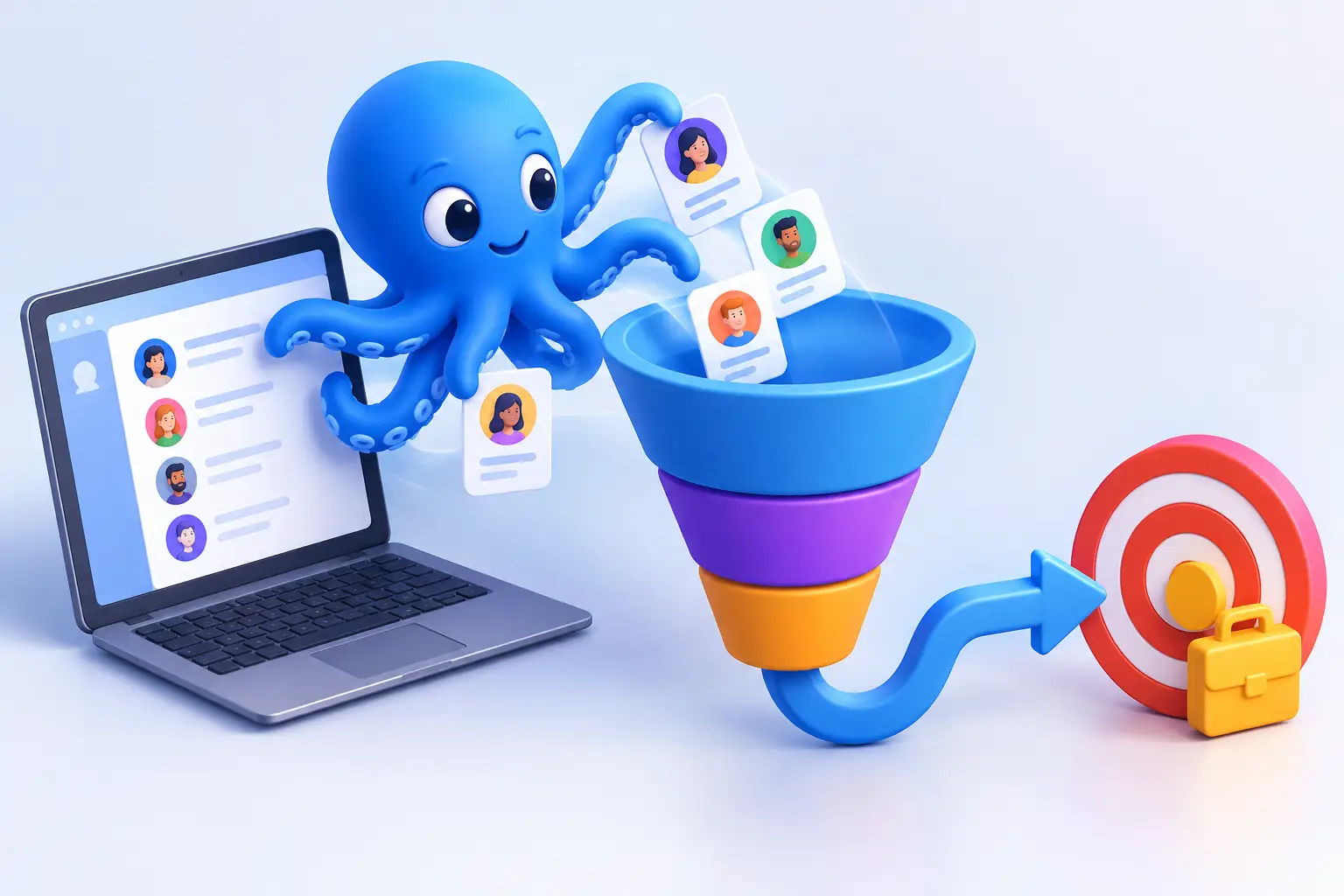
The number of leads looks good in a report, but it doesn't necessarily mean the advertising is working. Ten leads that don't answer the phone aren't necessarily better than two leads that scheduled a meeting. Therefore, the important metric is progress along the funnel: how many inquiries you received, how many were suitable, how many turned into a call, a meeting, and an offer or deal.
Check weekly which sources bring leads that reach an advanced stage. Also, check the average response time, the number of inquiries without a next action, and leads waiting too long in the same status. These data aren't meant to burden you with reports. They're meant to reveal exactly where money and time are slipping away.
If there are many unsuitable inquiries, the ad might not be clear enough or it's being advertised to too broad an audience. If there's high suitability but few meetings, the issue might be in the speed of follow-up or the follow-up call. Only by separating the process stages can you fix the right link.
Let automation handle advertising, let the team handle people
There's no advantage in an experienced agent spending hours copying and pasting the same ad, searching for groups, or manually checking if the ad went live. These are repetitive tasks that drain focus and distance you from the conversation that leads to a deal.
Automation should maintain the continuity of advertising, tailor the text to audiences, provide documentation, and update you on what happened. You should take the freed-up time and invest it in quick responses, proper screening, follow-up calls, and meetings. Without an additional interface, without chaos, and without losing control over what was advertised.
At the end of the workday, don't just ask how many ads went live. Ask which lead is waiting for a response, who has an action scheduled for tomorrow, and which conversation can progress to a deal. When every inquiry has an owner, context, and next action, your advertising stops being noise and becomes a system that generates real work.